What Is Market Value in Car Insurance? How Insurers Value a Written-Off Vehicle
If your car is
written off or stolen, most motor insurance policies will only pay the vehicle's
market value immediately before the incident. This can come as a surprise to many drivers, particularly if they expected the insurer to cover the cost of replacing the car with the same model.
In reality, insurers assess what your vehicle was worth on the open market at the time of the claim. This figure, known as market value, plays a central role in calculating insurance settlements.
Understanding how market value works can help you better judge whether an insurance settlement is fair and what steps you can take if you believe the valuation is incorrect.
What is the market value of your vehicle? Why is it relevant to your car insurance?
The market value of a vehicle is what it would cost to buy it now, taking into account its age, mileage, and condition.
When a car is written off, insurers normally calculate the settlement based on its market value rather than its original purchase price.
What does market value mean in practice?
In simple terms, market value reflects what someone would realistically have paid for your car just before the incident occurred.
It is not:
- the amount you originally paid for the vehicle
- the cost of buying a brand-new replacement
- or the balance you may still owe on finance
Instead, insurers estimate what the car would have sold for on the used car market at the time of the claim.
For example:
- You bought a car for £18,000
- Three years later, similar vehicles are selling for around £12,000
- If the car is written off, the insurer will normally base the settlement on the £12,000 market value.
How insurers calculate the market value of a vehicle
Insurance companies use a combination of industry data and real-life market evidence to determine a car’s value.
This usually involves analysing a number of factors:
Make and model
Certain vehicles retain value better depending on demand and reliability.
Age of the vehicle
Older cars generally have lower market values due to depreciation.
Mileage
Lower mileage can increase a vehicle’s value, while higher mileage may reduce it.
Vehicle condition before the incident
Pre-existing damage or poor condition can affect the valuation. Lack of servicing and maintenance may also affect the value.
Specification and optional extras
Higher specification vehicles may command higher prices than base models.
Current market listings
Insurers commonly compare similar vehicles currently advertised for sale.
The valuation guides insurers commonly use
To help ensure valuations are consistent, insurers usually rely on established automotive pricing tools used across the motor trade.
These include:
Glass’s Guide
One of the most widely used vehicle valuation systems in the UK, used by insurers, dealerships and finance companies.
CAP HPI
A major automotive data provider that analyses large volumes of vehicle transaction data and market patterns.
Parkers
An independent automotive pricing guide widely used by consumers.
Motor Insurers can also review live market data from major vehicle marketplaces such as:
This helps ensure valuations reflect current used car market prices.
When insurers may not use the Market Value
There may be a few occasions when a motor insurer will not use the vehicle's current market value if they declare it a write-off.
- You have a ‘New for Old’ term in your motor insurance - This is where the motor insurer will provide you with a new, replacement vehicle instead of paying you a market value settlement. Criteria for qualifying for this could include being the first registered keeper and the vehicle being less than a year old at the time of the write-off.
- You do not have ‘market value’ cover for the replacement cost. Some motor trade and fleet-style motor insurance cover may only cover the trade value (the auction, or trade-in value) and not the full market replacement cost.
Why market value is often lower than the purchase price
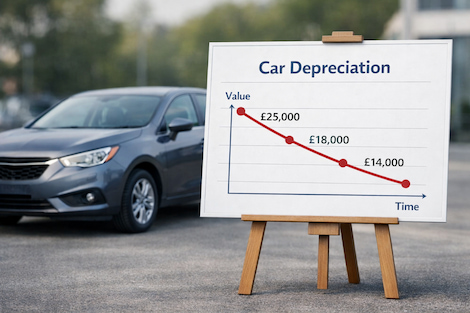
One of the main reasons insurance payouts can feel disappointing is vehicle depreciation.
Cars usually lose value over time as they age and accumulate mileage.
For example:
| Purchase price |
£25,000 |
| After 1 year |
£20,000 |
| After 3 years |
£15,000 |
If the car is written off after three years, the insurer would normally base the settlement on the £15,000 market value rather than the original purchase price.
What happens if your car is written off?
Market value is especially important when a vehicle is declared a total loss.
If repair costs exceed the vehicle's value, the insurer may decide it is uneconomical to repair. Instead, the vehicle will be written off, and the insurer will offer a settlement based on the car’s market value immediately before the accident.
What if you disagree with the insurer’s valuation?
Disagreements about vehicle valuation are relatively common.
If you believe the insurer’s settlement offer is too low, you can challenge the valuation by providing evidence.
Useful evidence may include:
- adverts for similar vehicles currently for sale
- proof of specification or optional extras
- service history or maintenance records
- records displaying the vehicle’s condition
If a dispute cannot be resolved directly with the insurer, you may be able to escalate the complaint to the
Financial Ombudsman Service, which can review whether the valuation is fair.
Why market value matters when buying GAP insurance
Because insurers normally pay market value, there can sometimes be a gap between:
- the insurance settlement
- and the amount originally paid for the vehicle
This difference is one reason some
drivers choose GAP insurance, which is designed to cover the shortfall between the insurance payout and the original purchase price or replacement value.
Why do insurers use market value?
Insurers use market value because it reflects the vehicle's current replacement value before the claim occurred. This helps ensure settlements are based on current used car prices rather than the original purchase cost of the vehicle.
Important points to remember
- Motor insurers usually settle claims based on market value.
- Market value reflects what the car was worth immediately before the incident.
- Valuations take into account factors such as mileage, condition, and market demand.
- Depreciation often means the payout is lower than the purchase price.
- Drivers can challenge a valuation if they believe it is inaccurate.
Understanding how market value works can help you better prepare for how motor insurance claims are settled if your car is written off or stolen.
Reviewed by
Mark Griffiths, Founding Director and Insurance expert
Last reviewed: 28th March 2026


